


Determining the wall distance of a curtain rod
When hanging curtains, the correct wall distance for a curtain rod is essential. If the rod hangs too close to the wall, curtains can press against the windowsill, radiator or window handle. If the distance is too large, the whole setup can look cluttered or unstable. In this blog, we explain step by step how to determine the ideal wall distance for a custom-made curtain rod.
What is the ideal wall distance for a curtain rod?
The ideal wall distance for a curtain rod is usually between 5 and 12 cm. For lightweight curtains such as sheer curtains or inbetweens, a distance of 5 to 8 cm is often sufficient. For thicker drapes, 7 to 12 cm is usually needed. If you have a radiator, windowsill or window handle below the window, add at least 1 to 2 cm of extra space to the distance so that the curtains can move freely.
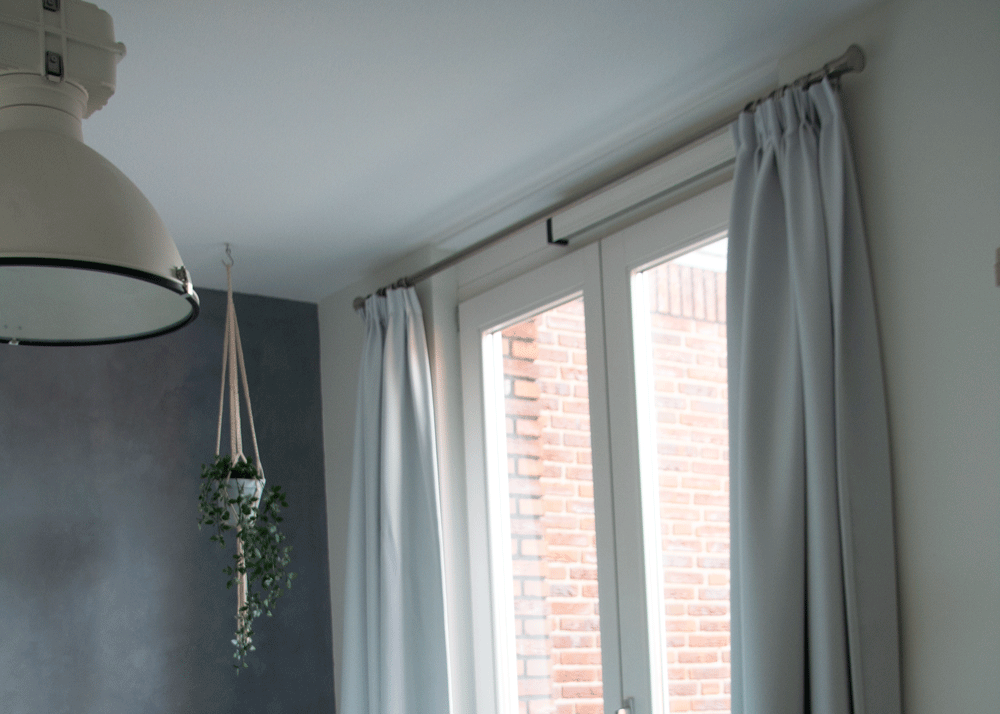
Why is the wall distance of a curtain rod important?
The wall distance of a curtain rod (also known as the projection size) is the distance between the wall and the centre of the curtain rod. Among other things, this measurement determines:
- How your curtains hang
- Whether they hang clear of the windowsill, radiator or window handle
- The look and feel of your window and interior
- The functionality with, for example, double curtains
A correct distance between the curtain rod and the wall ensures that curtains move smoothly and hang nicely.
What wall clearance does a curtain rod need?
The ideal distance between a curtain rod and the wall depends mainly on the type of curtain and any obstacles around the window.
| Situation | Recommended distance from the wall |
| Sheer curtains / inbetweens | 5–8 cm |
| Over-curtains | 7–12 cm |
| Double curtain rod | 15–20 cm |
| Radiator or window sill present | distance + an extra 1–2 cm |
These guidelines will help you establish a good basis for positioning your curtain rod.

Step 1: Look for obstacles around the window
To work out the correct wall clearance for your curtain rod, start by measuring anything that protrudes from beneath or around the window.
For example:
- Radiator
- Window sill
- Window handle or grip
- Excellent window frames
The curtains must be able to hang freely here without getting caught. Therefore, measure the distance from the wall to the point that protrudes the furthest.
Add at least 1 to 2 cm of extra space here to allow the curtains to move freely.
Step 2: Take the type of curtain into account
The type of curtain plays an important role in determining the correct distance between the curtain rod and the wall.
Over-curtains
Thick curtain fabrics require more space. As a rule of thumb, allow for a wall clearance of 7 to 12 cm
In-between curtains or sheer curtains
Thinner fabrics can be hung closer to the wall: 5 to 8 cm from the wall
Double curtain rod
Do you want to hang both in-betweens and drapes? If so, you’ll need extra space: at least 15 to 20 cm of total overhang
Step 3: Choose the right supports
The distance between a curtain rod and the wall is ultimately determined by the length of the brackets. These are available in various lengths and designs.
When choosing supports, bear the following in mind:
- The weight of your curtains
- The diameter of the rod
- Whether you use a single or double rod
All our supports can be easily cut to size. You can do this with a hacksaw. So, if you have a support that’s a bit too long, you can cut it down yourself. Of course, we can also do this for you if you let us know the required size.
19 mm or 28 mm for a curtain rod: which should you choose?
The diameter of the curtain rod does not directly affect the distance between the rod and the wall, but it does affect its load-bearing capacity.
The 19 mm curtain rod: for light curtains
A 19 mm curtain rod is ideal for lightweight fabrics such as net curtains and in-betweens. Thanks to its slimmer diameter, this rod has a refined look.
For heavy drapes, a 19 mm rod is less suitable, as it is more likely to sag on wide windows.


The 28 mm curtain rod: for both lightweight and heavy curtains
A 28 mm curtain rod is sturdier and suitable for both light curtains and heavy drapes. This makes this size much more versatile and suitable for almost any situation.
Additionally, a 28 mm rail gives a slightly more robust and luxurious appearance, especially with larger windows.
In short
- 19 mm: suitable only for lightweight curtains
- 28 mm: suitable for both light curtains and full-length curtains
Common mistakes when determining the wall distance
When determining the wall distance of a curtain rod, the same mistakes are often made:
- Measure only up to the wall, without taking radiators into account
- Choosing brackets that are too short, causing curtains to hang against the windowsill
- No extra space provided for the curtain pleat fold
By measuring carefully in advance, you prevent curtains from hanging poorly.
Conclusion: how to determine the correct curtain rod wall distance
You can work out the correct wall distance for a curtain rod in four simple steps:
- Measure the furthest protruding point (for example, radiator or windowsill)
- Add 1–2 cm of extra room to this
- Bear in mind the thickness of your curtains
- Choose a suitable support length
The correct wall distance ensures that curtains not only hang nicely, but also function perfectly.
Not sure which size to choose? Please feel free to contact us. We’d be happy to help you make the right choice.
Frequently asked questions about the distance between curtain rods and the wall
What is the standard wall clearance for a curtain rod?
Most curtain rods are fitted at a distance of approximately 7 to 10 cm from the wall. This provides sufficient space for most curtain fabrics.
How much space should there be between the curtain and the radiator?
Ensure there is a minimum of 1 to 2 cm of space between the curtain and the radiator or windowsill so that the curtain can move freely.
Can a curtain rod be hung too far from the wall?
Yes. If the curtain rod is too far from the wall, it may become less stable and the whole thing may look less neat.